AI Design Tools That Replace a Design Agency for Startups
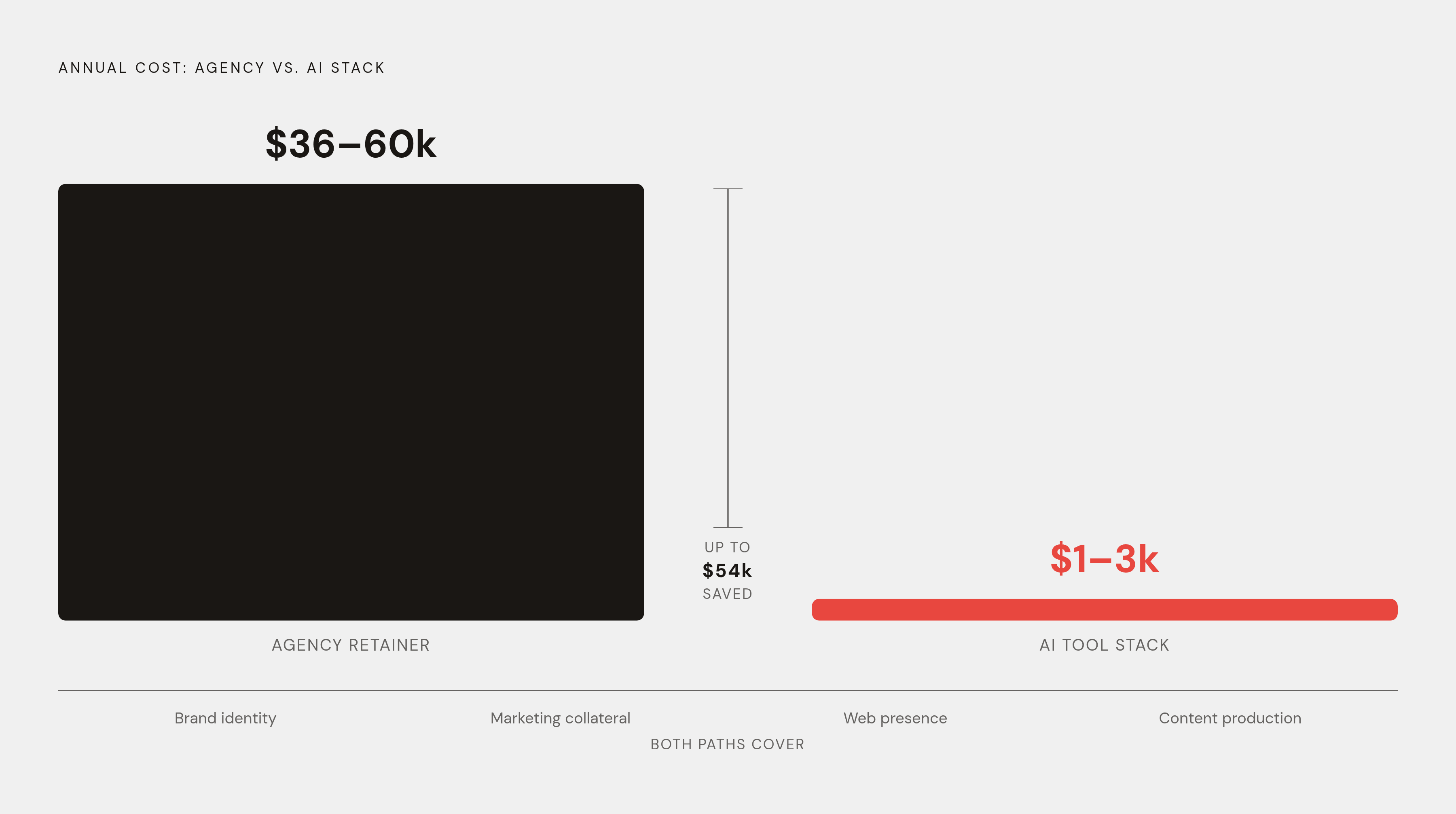
Startups can now replace $36,000-a-year agency retainers with affordable AI tools.
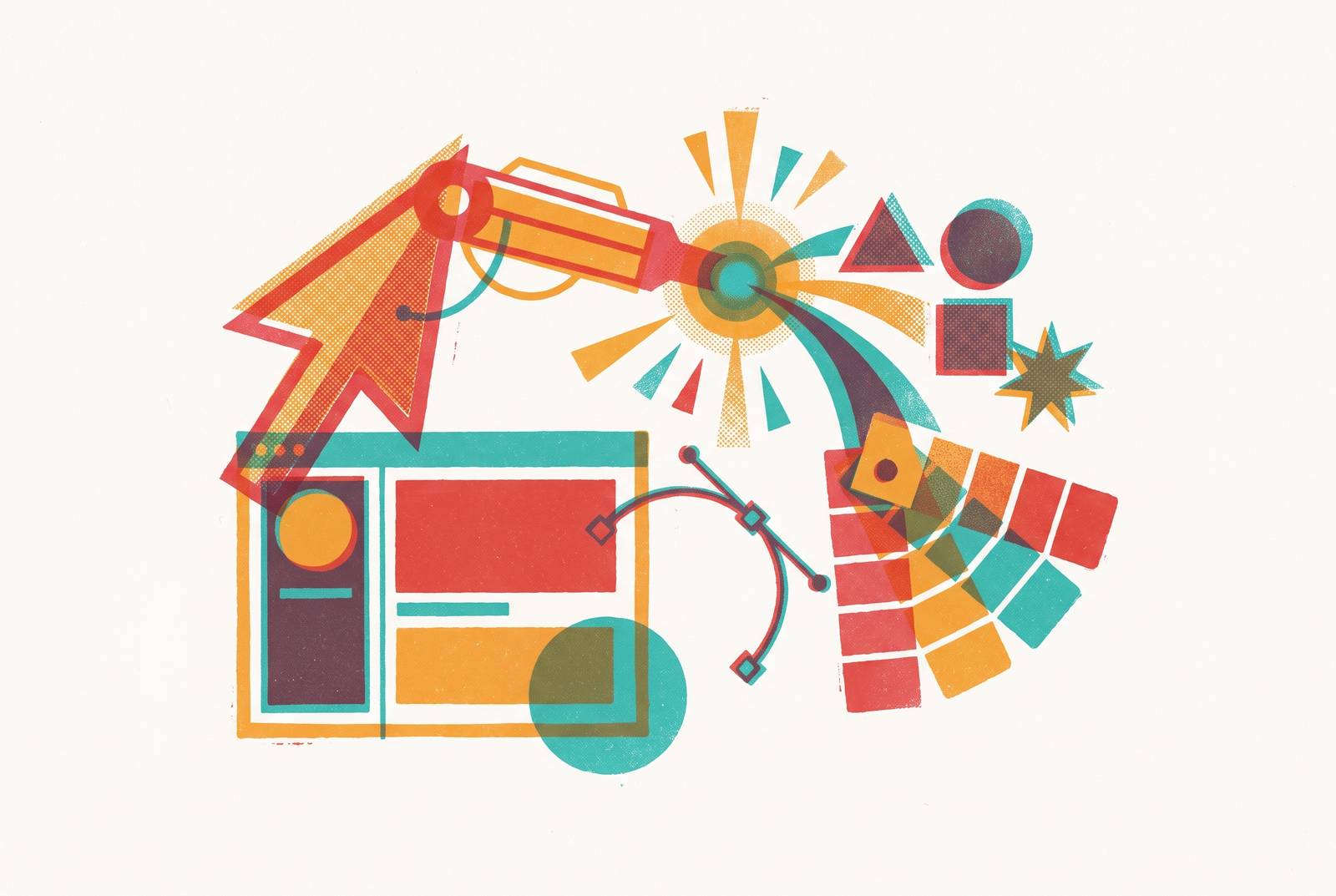
Startups have paid agency retainers for one reason: no credible alternative existed for producing brand assets, marketing materials, a working website, and a steady stream of on-brand content at the speed a growing company needs. A typical retainer covers four functions. Brand identity, marketing collateral, web presence, and ongoing content production make up the bulk of what that monthly invoice actually buys, and each one is now something a targeted AI tool or platform can do on its own. The money gap between those two paths is not small. A traditional agency retainer runs $3,000 to $5,000 a month, while the AI tool stack that covers the same ground costs a sliver of that, which adds up to tens of thousands of dollars a year a founder no longer has to raise, borrow, or justify to a board. The question worth asking isn't whether AI design tools can match an agency across the board but which agency functions still genuinely need one, and that question is what the rest of this piece tries to answer, section by section, function by function.
How the AI design production stack works in 2026
AI design tools in 2026 don't just run old software faster. They've compressed the entire production stack so a brief turns into a finished, editable asset in roughly the time an agency would spend on a kickoff call.
Eleken's documented six-phase workflow shows the scale of that compression. Context synthesis that used to eat up hours now takes minutes, and a full project workflow that once stretched across many days now runs in about an hour. The Designer Fund and Foundation Capital's AI in Design 2026 report backs this up from the adoption side: a strong majority of designers now use AI for design tasks every week, and most use it daily. The experimental phase, where teams poked at AI tools to see if they were any good, is over.
What changed is what the tools actually do, not just their speed. The biggest shift in 2026 is agentic AI, meaning tools that no longer just spit out ten logo options and wait. They take a brief, execute across multiple steps on their own, and hand back something a human can actually review and approve. Agentic coding tools like Claude Code extend that same logic into development: a founder can go from brief to working, production-quality code with a far smaller engineering team standing between the idea and the shipped product. That collapses a timeline agencies used to own outright, the stretch between "here's what we want" and "here's what's live."
Practitioners describe the resulting division of labor in fairly consistent terms. AI handles wireframe generation, placeholder copy, layout variants, and asset production, the repetitive, high-volume work that used to fill junior designers' weeks. Humans handle brand alignment, usability, accessibility, and the final call on what actually ships. That split is, not coincidentally, close to how a competent agency has always structured its own internal process, with account leads making judgment calls while production staff cranked out variants. The difference now is that a startup can run that same structure in-house, with a founder or a single marketing hire sitting in the judgment seat instead of paying someone else's account team to sit there for them.
Brand identity: what AI tools cover
Brand identity is the clearest case for the whole argument, and also the one where the limit appears fastest. For most early-stage startups, AI tools now cover enough of the brand identity function to launch and run the business day to day. The remaining gap sits at the level of strategic differentiation, not production.
Adobe Firefly trains primarily on Adobe Stock, licensed content, and public domain material, with only a small, moderated subset of AI-generated images mixed in. That training data gives Firefly the strongest commercially defensible usage rights of any mainstream AI design tool out of the box, a real purchasing criterion for a startup that doesn't want a logo or a hero image pulled two years into its life over a copyright dispute nobody checked for at the start. Practitioners have landed on a workable two-tool approach: generate creative concepts in Midjourney, where the aesthetic range and distinctiveness are strongest, then recreate the winning direction in Firefly to get a commercially safe production asset out the other end.
Honesty requires naming the ceiling here. Agencies build unique visual identities and a consistent brand experience across every touchpoint a customer sees. AI tools produce strong individual brand elements, a usable logo, a defensible color system, a typeface pairing that doesn't clash, but none of that adds up to capturing a company's personality or the narrative that makes a brand memorable rather than merely tidy. That gap lives at the strategic level. For a company in its first year, the thing it actually needs is execution-level brand identity that looks professional and ships fast. The strategic layer, the deeper story a brand tells as it matures, can wait, or it can be handled by the people who founded the company and know that story better than any outside team would on a first engagement anyway.
Marketing materials and sales assets: replacing the agency's production function
Brand identity is a one-time project. Marketing materials are not, and that recurring need is what most agency retainers are actually billing for.
The mechanism that makes AI tools viable here is editability. That distinction, editable versus static, separates a useful AI design tool from a dead end. A static image generator hands over an asset frozen the moment it's created. A real editable canvas hands over something the whole team can keep working with, update, and adapt as the message or the data changes.
For data-heavy decks specifically, tools like Bricks, which offers a free tier, take spreadsheet data straight from XLSX, CSV, or PDF files and turn it into a complete slide deck with charts and tables that stay editable, not pasted in as static screenshots. That matters for a founder updating a board deck every month: the numbers change, the story the deck tells needs to change with them, and nobody wants to pay a designer's hourly rate to swap out a bar chart.
Web presence: how AI website builders handle the startup launch case
Web presence is the third major function a retainer historically covered, and it's also where the AI tool category has split most clearly into distinct paths depending on what a founder actually needs.
Two categories now exist. Traditional marketing site builders, among them Wix, Squarespace, and Framer, handle the landing page and brochure site case. Full-stack application builders like Lovable and Bolt.new handle something different: a product with actual functionality behind the marketing layer. Picking between them is less about which is "better" and more about which job needs doing.
Wix launched Wix Harmony in January 2026, a hybrid builder that combines natural-language, vibe-coded site generation with full drag-and-drop visual editing. A founder with no technical background can describe a site in plain language and have a complete version running in minutes, then go in and adjust it by hand the way they would in any visual editor. Framer's AI generation serves a slightly different crowd, freelancers and startups that need a landing page fast and care a lot about how it looks the moment it goes live. Framer's outputs tend to look finished without much fiddling. Across both categories, vibe coding in 2026 means prompting a tool like Webflow AI or Framer AI to build a landing page section through natural-language feedback and shipping it without writing a line of code. The bottleneck has moved. It used to be technical execution. Now it's creative direction, the part a human still has to supply.
None of this means an agency is the only route to a credible site anymore, and that's the real point of this section. The blue isn't quite the same blue. Nobody agency-proofed the inconsistency, because nobody was watching for it.
Social content and brand asset volume: the ongoing production problem
Quality is not the hard part of replacing an agency. Volume with consistency is, the grind of producing a steady stream of LinkedIn posts, ad creative, and social assets that all still look like they came from the same company. That's the function AI tools handle through a specific mechanism: template locking paired with variant generation.
Tools that enforce design tokens, fixed colors, fonts, spacing, logo placement, and then generate on-brand variants from a locked template solve the drift problem that occurs when more than one person on a team starts making assets without tight constraints. The practical workflow for a go-to-market team looks simple in description even though it took real tooling to get there: one person sets the brand template once, AI generates the on-brand variants from that template, and the team ships, with no agency sitting in the approval loop slowing anything down.
For video specifically, tools like Runway and Google's Veo turn a text prompt into a finished high-definition clip, and can change lighting or remove an unwanted object from a shot after the fact. That covers a chunk of what used to require an actual studio booking for a short social video.
None of this is a theoretical efficiency story. Superside ran a documented pilot program that produced a confirmed 36 percent efficiency boost in two months, the equivalent of more than a thousand hours saved and real money kept off the design budget. This figure describes what AI-augmented production delivered in that pilot, not an endorsement of Superside's own agency model.
The one agency function AI tools do not replace
AI design tools replace the execution side of what an agency does. They do not replace strategic brand differentiation, the creative direction that decides what a brand should feel like in the first place, or the judgment that separates a distinctive identity from one that's merely competent and interchangeable with ten others.
The strongest version of the counterargument states that agencies build unique visual identities, messaging, and a consistent brand experience that AI genuinely cannot fully capture. AI tools produce basic branding elements well. They do not produce a company's personality. Nielsen Norman Group has found that end-to-end AI generators remain inconsistent enough that identical prompts can produce different layouts on different runs; these tools work best treated as a starting point for a human to refine, not a finished design ready to ship untouched. There's a related risk in the research phase of design work. Eleken has documented AI hallucinating competitor features more often than practitioners expected going in; every AI-generated research output needs a manual check before anyone trusts it. That's a workflow discipline problem, something a process fixes, not a reason to abandon the tools.
So how should an early-stage startup actually handle the gap? For most companies at this stage, the strategic brand layer can sit with the founding team, who understand the company's personality and story better than an outside agency would on a first engagement regardless of budget. Where that's not enough, a one-time engagement with a brand strategist costs far less than a standing monthly retainer for execution work the AI stack now handles anyway. The argument running through this whole piece was never that AI replaces everything an agency does. It's that AI replaces enough of it that paying for a retainer, every month, indefinitely, stops making financial sense for most startups at this stage.
The workflow mistake that makes AI design tools fail
Most of the time, when AI design tools fail to replace what an agency used to do, the tools aren't the reason. The failure traces back to adopting a tool without first redesigning the workflow it's supposed to fit into.
The consensus among practitioners working through this in 2026 comes down to a simple ordering principle: workflow first, tool second. The common mistake runs the other way. A team picks an AI-powered product because it looks impressive in a demo, rolls it out to the whole org, and only afterward tries to figure out where it actually fits into how work already gets done. By then the tool is either bolted onto a process it was never designed for, or it's sitting unused because nobody redesigned the handoffs around it.
A startup switching off an agency retainer needs to map its own functions first. Who owns brand alignment decisions? Who checks AI-generated research for the kind of hallucinated competitor features Eleken has documented? Who locks the design template before anyone starts generating social variants? Those questions have to get answered before a tool gets purchased, not after, because a tool bought in the wrong order just becomes an expensive habit nobody built a process around. Get the order right, and the agency retainer starts to look less like infrastructure and more like a line item nobody quite remembers why they kept paying.
Sources
- AI in Design 2026: Best Tools, Real Workflows, What's Next
- AI Design Trends 2026: How AI Is Changing UX/UI Design
- 15 best AI design tools in 2026 (free & paid options compared) - Guideflow Blog
- The 5 AI Marketing Tools That Will Replace Your Agency (2026)
- Design Agency for Startups: 12 Top Picks + Hiring Guide
- New 8 AI Design Trends in 2026 for Enterprises Shaping Creativity
- How to Integrate AI in Your Creative Design Process (2026)
- AI design tools for brands: 5 tools shaping creative workflows in 2026