The In-House Creative Stack That Ends the Agency Retainer Cycle
Build the system before you cancel the retainer.
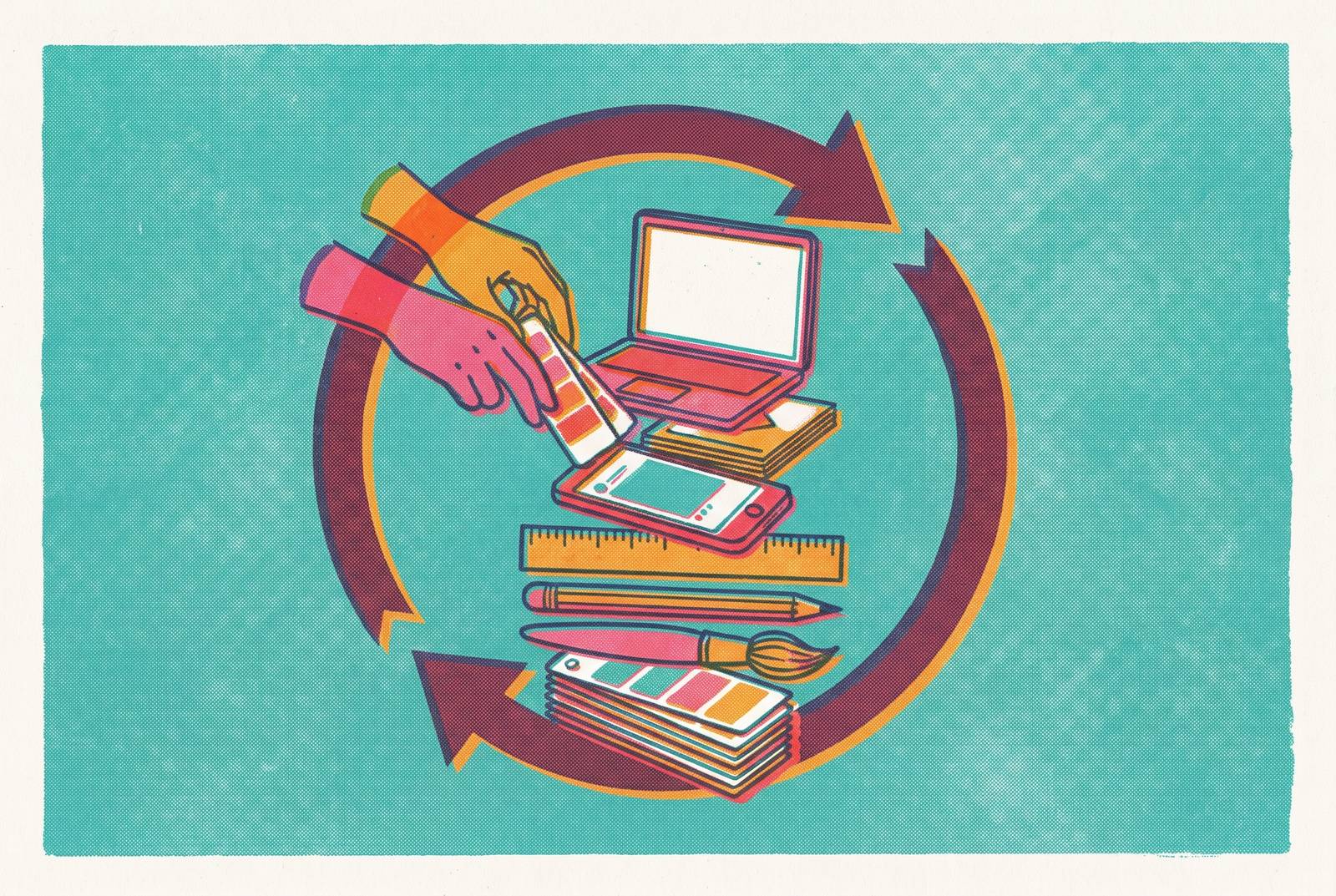
The agency retainer cycle ends when a lean team assembles four specific layers (brand infrastructure, production tools matched to formats, a defined workflow, and ongoing governance) that together let it own output a retainer used to cover. Canceling the contract is not the first move. Building the replacement system is, and most teams get the order backwards.
Why agency retainers are losing ground to in-house creative stacks in 2026
Nobody calls the agency to cancel. The retainer still exists on paper. But it's being unbundled one line item at a time, quietly, until the renewal conversation arrives and someone finally asks what, exactly, is still being used.
Retainer pricing was built for a different production reality: a brief that required a team of five people and two or three weeks of turnaround. That math justified a standing monthly fee. It doesn't describe most routine creative production anymore, and the gap between what retainers bill for and what a single operator can now produce solo is where the erosion starts.
Mavlers Agency's 2026 analysis has a name for the thing actually being eliminated: the "briefing tax." It's not the design work itself that AI tools beat agencies on. Mavlers argues that tax, not craft quality, is the real line item getting cut.
That doesn't mean agencies have nothing left to sell. First-draft creative, content variations, standard landing pages, campaign reporting: these are the line items quietly migrating in-house, and they were never where the strategic value lived.
Why canceling the retainer is the wrong first move
A team sees the briefing tax clearly, gets excited about the savings, and cancels the retainer before anything exists to replace it. What follows is a production gap with no brand consistency check, no defined workflow, and no one accountable for quality, and the output degrades within the first project cycle.
In-house isn't automatically cheaper once every cost is counted honestly. That cost doesn't appear on the spreadsheet that just compares retainer fees against software subscriptions.
The right question is what has to exist before a team can safely own this output itself. What that build actually consists of is the rest of this piece.
The four-layer model that defines a working in-house creative stack
A working in-house creative stack is four interdependent layers, and skipping any one of them produces a specific, predictable failure.
Brand infrastructure is the documented system, covering color, typography, logo rules, image style, layout grids, and tone, that lets any tool produce on-brand output without a designer checking every single asset. Production tooling is the specific set of AI-assisted tools assigned to the formats the team actually produces most often: slides, social posts, one-pagers, landing pages. Workflow and roles define who briefs the work, who produces it, who approves it, and how fast that loop closes before work piles up in limbo. Governance is the ongoing quality bar and the cadence for refreshing the brand system and tool choices as the underlying models change under everyone's feet.
When a team skips straight to the tools, output looks fine for about three weeks, and then it doesn't, and nobody can say precisely why. A system to brief and approve work consistently is harder to buy, so it gets built last or not at all, and that's backwards given how much it determines everything downstream.
Building the brand infrastructure layer: what AI tools need from your guidelines
Brand guidelines written for a human designer fail against an AI tool in a specific, mechanical way. Fed into a generation tool with no such context, that same phrase gets interpreted through whatever the model was trained on, not the brand's actual visual history, and the output drifts from the intended look within weeks of regular use.
The old PDF brand book, the one with paragraphs about "brand personality" and mood boards full of adjectives, doesn't transfer into this context. Prompt templates belong in this same system, not bolted on afterward. A template that specifies style references, mood, and technical spec produces consistent results across different tools in a way that a one-line prompt never will.
Building this whole structured kit only pays off once output volume reaches a point where manually checking every asset for consistency becomes the actual bottleneck, and the infrastructure earns its cost at scale, not before it.
Assigning production tools to the formats your team owns
The wrong question is "which AI design tool is best." There is no single best tool, because slides, social posts, PDFs, and websites are different problems with different leading options, and the useful exercise is matching one tool to each format the team actually produces.
Slides and decks come first because the craft constraint here doesn't change no matter which tool is used: a polished layout does not rescue a deck making a muddy argument. AI tools handle structure and formatting well. The human still has to make the case. Slidebean, by contrast, is built specifically for startup fundraising decks, and its higher-tier Accelerate plan adds investor CRM and financial modeling features that a general deck tool has no reason to include.
Social posts, LinkedIn especially, run on a different logic. AI Carousels offers a template library with no signup required, which makes it a reasonable starting point for a team that isn't ready to commit to a full platform yet.
One-pagers and PDFs deserve their own line because they're the format most often produced by sales teams with zero designer support, and brand drift is most visible here, right in front of a prospect. The output has to stay editable after generation. A static image a rep can't touch means every price change or customer name swap routes back through design, which defeats the entire point of owning this in-house.
Static websites split by what the business actually needs. Design-led marketing sites point toward Framer or Webflow. Emergent is the right call for SMB founders needing actual business functionality (customer portals, booking systems, inventory tracking, internal dashboards) rather than a brochure site, and building that without hiring a developer is the whole appeal. One warning that belongs in every one of these evaluations: Durable offers no HTML export, so the site is gone the moment the subscription lapses. Portability, meaning who actually owns the asset once it's built, is a real decision criterion for any hosted builder, not a footnote.
The team structure and workflow layer
Tool selection isn't usually what breaks a transition. The absence of a defined loop is. Without an agreed path from brief to approval, even a well-chosen set of tools just defaults to whatever habits each individual person brings to the job, and there's no shared bar anyone's held to.
A university's work with a vendor shows a structurally different relationship from a standard retainer: the agency's job was to make itself less necessary, showing how an agency relationship can evolve over time.
The production loop that prevents a tool stack from turning into a free-for-all has five steps: brief, AI-generated explorations, human selection among those options, refinement, and a final quality and legal check before anything ships. Skip the selection step specifically, where a human actually chooses among several AI drafts instead of taking the first output, and the result reads generically almost every time.
There's a real hiring cost to be direct about here. Teams that frame the whole in-house build purely as a cost-cutting play are often caught off guard by this line item specifically. It doesn't undo the case for building the stack; it just means the savings math has to include this person's full cost, not just the tool subscriptions.
What compounds over time is something a rotating agency account team structurally can't offer: an in-house team's models and workflows get sharpened against the actual brand, the actual audience, and the actual campaign history sitting behind them. Keeping that advantage running takes active maintenance. Governance is where that maintenance happens.
Creative governance: keeping the stack from drifting as tools and models change
Whatever model is leading a given creative task in January is rarely still leading by July. A stack with no governance process doesn't fail loudly. It degrades slowly and quietly, and the drift usually isn't visible until a retainer renewal or a budget review forces someone to actually compare current output against what the brand used to look like six months back.
Tool churn is its own job, not a side task squeezed in during downtime. Brand kit maintenance follows the same logic: the image style guide, the layout templates, the prompt library, all of it needs to be re-tested against new tool versions on a schedule, not left untouched until something visibly breaks.
A 2026 Forrester study found that the large majority of US agencies now use generative AI, and much of that adoption is being used to cut costs in ways that come at creativity's expense. That exact risk doesn't disappear once production moves in-house; it just changes who's accountable for catching it, and without a creative lead actively evaluating what the tools are producing, the same cost-driven flattening happens internally instead.
Governance and production need to be different people, or at least different responsibilities held with real separation. The person responsible for the brand standard and the tool choices should not be the same person cranking out assets against a deadline, because when those two jobs collide under time pressure, maintaining the standard is the one that quietly loses.
Compliance triage belongs in this layer too, even if it's a smaller piece of it. The cadence that keeps all of this from drifting is a quarterly review, and the teams that hold up best tend to keep an external partner on retainer specifically for that quarterly check while running everyday production entirely on their own.
The hybrid model most teams land on after six months
Full in-housing turns out not to be the destination most teams actually reach. What they land on instead is a specific hybrid: an outside partner builds the system in a defined, time-boxed phase, the internal team runs daily production against that system once it exists, and the outside partner comes back on a quarterly basis for refreshes and for overflow work that exceeds what the internal team can absorb.
Superside's work with Doodle Labs is the clearest version of this on the brand-system side. The agency's job wasn't ongoing execution. It was building something durable enough that execution could move in-house.
The shape of the spend itself changes. CFOs tend to find that structure easier to approve, since it's tied to a defined deliverable rather than an open-ended retainer that renews on autopilot.
Sequencing the build for a lean team
Order matters here almost as much as the components themselves. Teams that buy tools before documenting brand infrastructure, or hire a creative lead before the workflow even exists on paper, tend to hit the same failure points regardless of how good their tool choices were.
Start with an audit, not a shopping trip. That audit, not a tool comparison chart, determines what the stack actually needs to cover.
From there, move to assigning tools to formats. Pick one primary tool per output format the team produces most. Start with whichever two or three formats account for most of the current retainer's scope, since that's where the cost savings and the risk both concentrate.
Next comes the production loop itself: brief, AI explorations, human selection, refinement, quality check. Assign an owner to each step by name, not by department, and run one complete cycle on something low-stakes before anyone uses the system on a client-facing or executive-facing asset.
Set the governance cadence before the stack goes live, not after something drifts. Put the first quarterly brand and tool review on the calendar in advance, so it happens as a planned event rather than as a reaction to a deck that suddenly looks off-brand.
Last, renegotiate. Bring the documented stack to the retainer renewal as evidence of what the internal team can now own, and propose a reduced scope. That keeps access to outside strategic capacity available for the moments that need it, while cutting the execution fee the stack has made redundant. Once it's in place, it doesn't need to be rebuilt again, just maintained quarterly to keep it from drifting.